I have been lucky to live among trees since my early childhood, which I spent with my family (parents, brother, and sister) in FRI (Forest Research Institute), Dehra Dun. My father was a research chemist, and my mother, a housewife, was also the secretary of the FRI ladies’ club for some time. We had a pet cow, a dog, hens, and two white pigeons. Among the trees, we planted peach, guava, plum, litchi, banana, and lime in the ample land attached to our house. We also kept honey bees in wooden boxes. Two Simbal (Bombax ceiba) trees were growing in that area and provided silky cotton for pillows.
On our morning walks, we came across many trees in the New Forest (the name of the place where we lived). Only pine trees were planted in one piece of land. Rows of tree trunks with conical crowns of needle-like leaves looked beautiful. There was also an area with tall clusters of bamboo. We used to make *pichkaris* from bamboo stems for spraying coloured water during the Holi festival. Bamboo stem cuttings were also used for feeding calves.
The man who used to take cows for grazing made a nice big umbrella from bamboo. He once gave me a lovely top (a toy) made from a bael fruit shell (Aegle marmelos, commonly known as Bengal quince, stone apple, or wood apple). It was made by creating two holes in a ripe bael fruit. One hole was at the point where the fruit attaches to the tree. This spot was later used to fix a wooden peg after the fruit contents (pulp, seeds, etc.) were removed. A thread was wrapped around the peg. The top was spun by pulling the thread while placing the pointed end of the peg on the floor. As the spinning speed increased, the air entering or leaving the hole produced a vibrating sound.
There were Jacaranda trees on both sides of Jacaranda Road in FRI. During the flowering season, the road looked like a lavender-coloured tunnel. Another road in Dehradun city was named after the trees growing along its sides—this was Eucalyptus Road.
There was a huge jackfruit tree near our house. Sometimes ripe jackfruits would fall and burst open on the ground. We used to enjoy eating the sweet pulp.
I completed my college education in Delhi and stayed in the hostel at Pusa Institute. There I came across many more trees, including sesame and various fruit trees growing in the orchard, such as grapefruit with two types of pulp – white and red.
After completing my education, I joined the Central Research Laboratory at IDPL in Virbhadra (Rishikesh) and came across many more trees, such as harad, baheda, amla, rudraksh, and katha. Silver oak trees were planted along the sides of the main roads.
My Encounter with the Silver Oak Tree
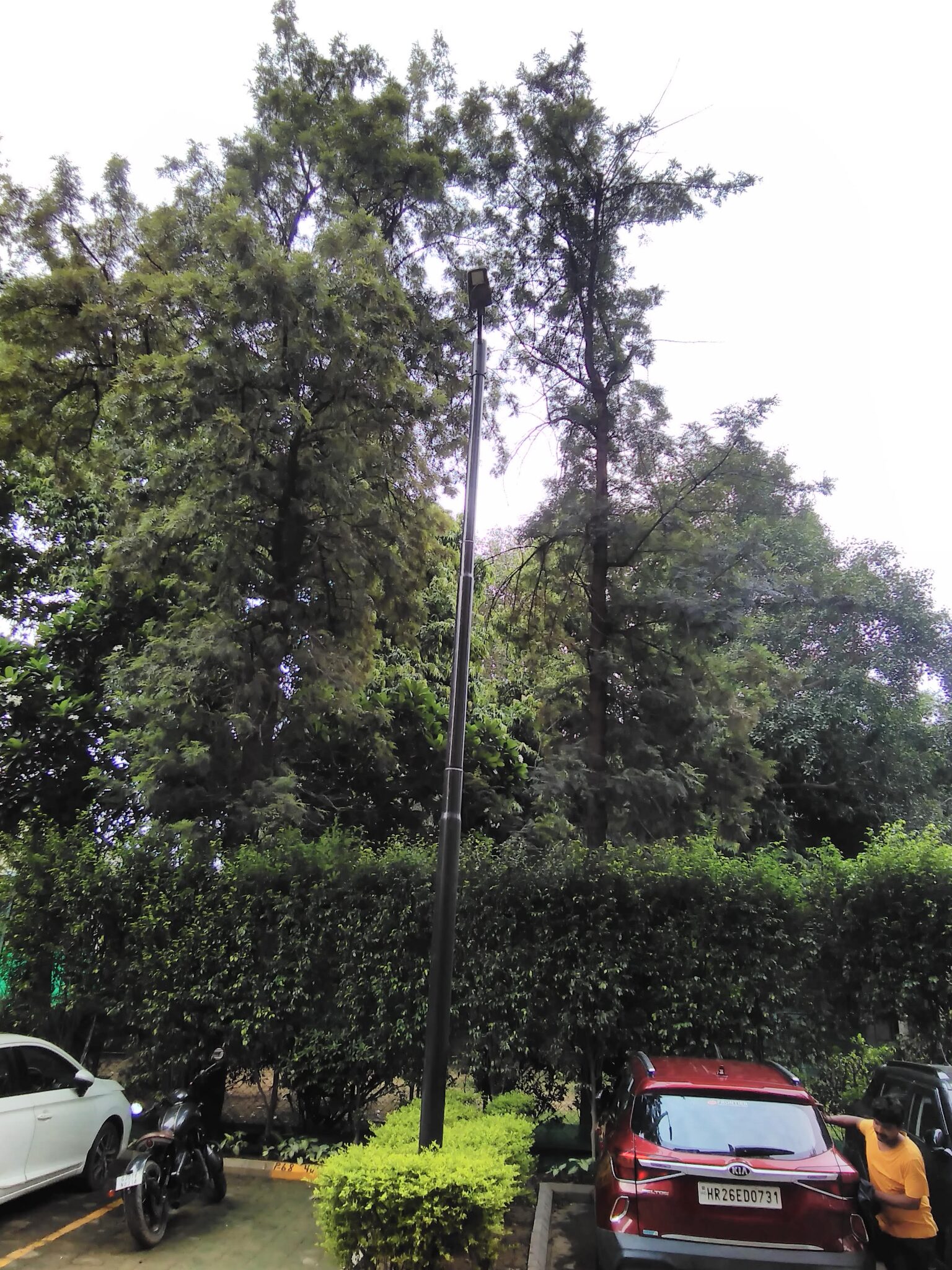
Two Silver Oak Trees growing on the sides of the lamp post in our residential campus in Gurgaon, Haryana
I happened to see this tree growing in several places, including Dehra Dun, Rishikesh, Chandigarh, and Gurgaon. It was mostly planted along the sides of main roads. In my childhood, I used to collect the gum exudates from the bark of the main stem for use in school artwork. Even though the sticking property of this gum was not as good as that of kikar or babul (Acacia), it served the purpose. As children, we also used to suck the flowers (inflorescences), which were sticky and sweet. The nectar attracted many honey bees.
After living in Delhi, I shifted to Gurgaon in January 2025. I have spotted two silver oak trees growing on our campus. I collected some fallen leaves and used them for mulching bonsai plants.
The silver oak tree has great potential in our country because of its many uses:
- It is a good ornamental landscape tree.
- It is evergreen, provides shade, and is suitable for growing along roadsides.
- It can be used as a windbreaker in fields around crops.
- Its branches are useful as firewood.
- The veneer wood is used in doors, windows, cabinets, and musical instruments.
- It provides nectar to honey bees.
- Its gum exudates can be used in the pharmaceutical industry.
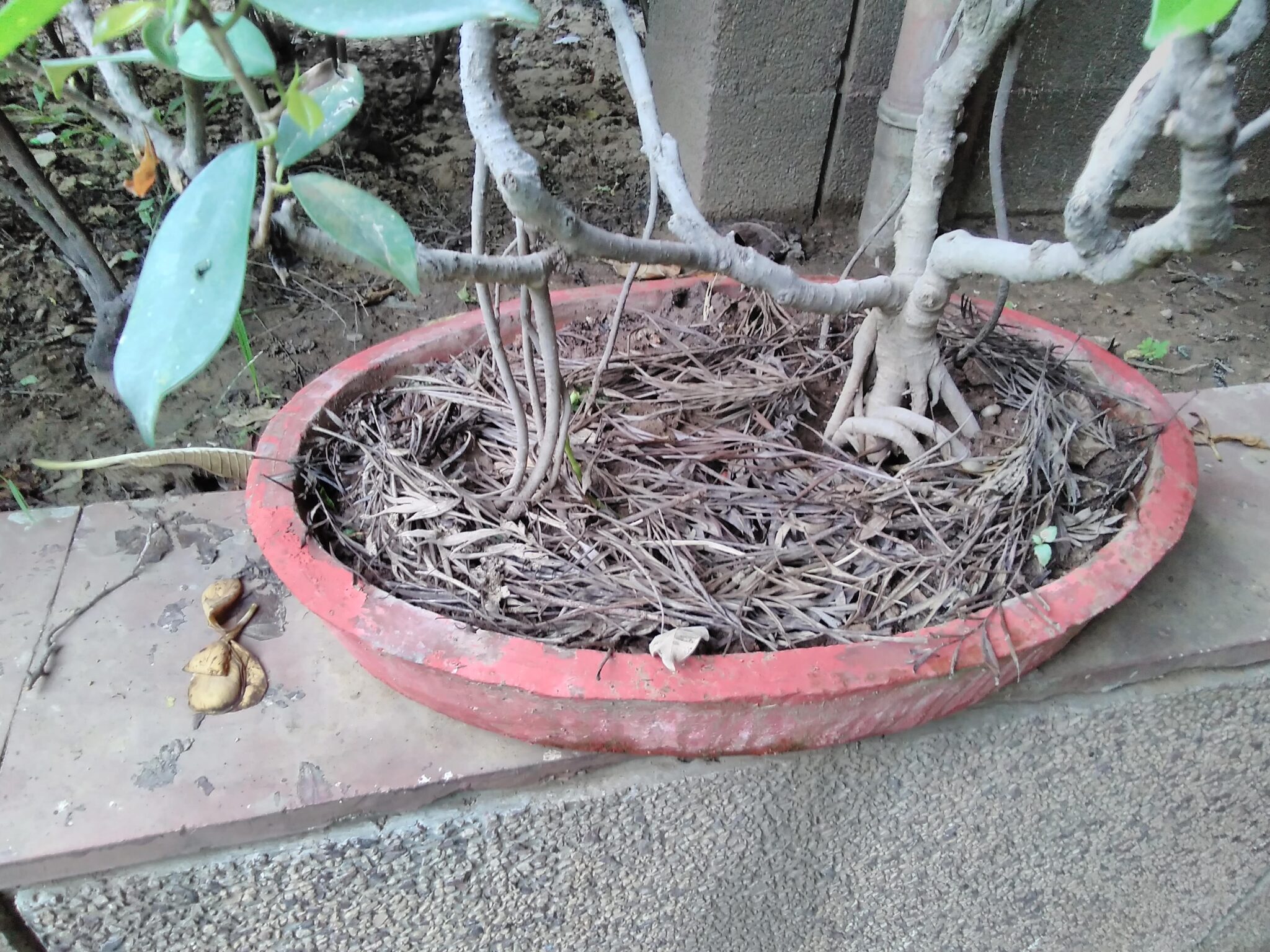
Leaves of the Silver Oak tree, spread over the root zone of a bonsai as a mulching agent
About the Author: Dr Surender Kumar Batra – BSc (Hons) Agr., MSc, PhD, IARI, New Delhi. Discovered Streptomyces anandii and its strains.