

Every morning, while walking through my school campus, I pass by a tall Ashoka tree that stands silently near the pathway. At first glance, it looks like just another tree among many, but one day my attention was caught by something unusual—bright red-orange bunches of flowers blooming proudly among the deep green leaves. That moment turned an ordinary walk into a memorable experience.
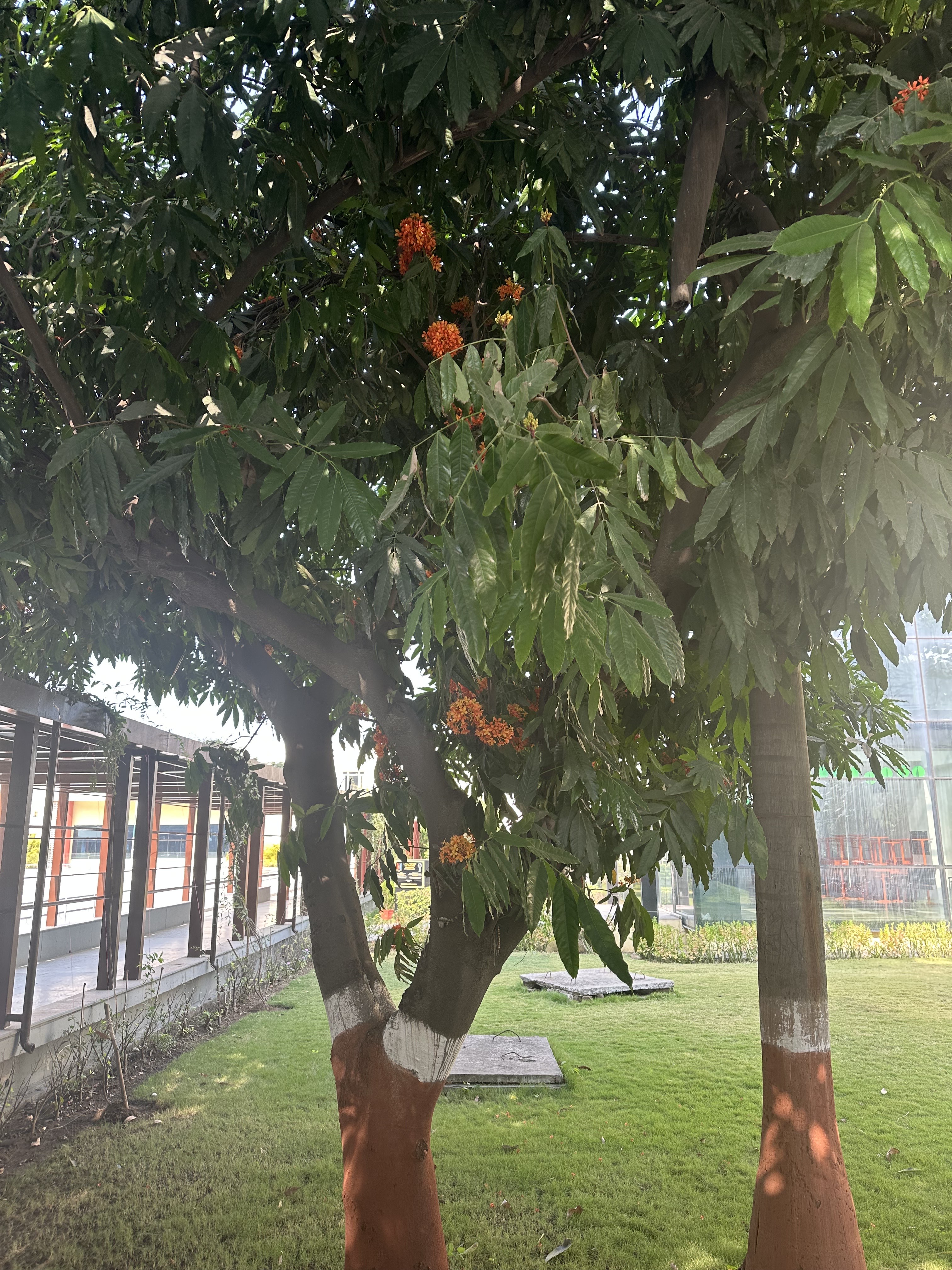
The Ashoka tree is not loud or demanding. Its long, narrow, glossy leaves hang gently, creating a cool, calming shade beneath. The trunk is strong and steady, rooted firmly in the soil, as if it has been watching generations of students pass by—running, laughing, learning, and growing. Standing under it, I felt a sense of peace, as though the tree itself was silently blessing everyone who walked past.
The red flowers were the most striking feature. They grew in clusters, glowing like small flames against the green background. Unlike roses or lotuses that are often celebrated, these flowers bloom quietly, without seeking attention. Yet, once noticed, they are impossible to forget. They reminded me of students in a school—some are outspoken and visible, while others work silently, blooming in their own time.
As I stood there observing, I remembered the cultural and historical importance of the Ashoka tree. In Indian tradition, the Ashoka tree is a symbol of joy, hope, and the removal of sorrow. Even its name means “without sorrow.” It is often associated with positive emotions, renewal, and inner strength. How meaningful it felt to see such a tree growing in a place of learning, where young minds are shaped and futures are built.
The Ashoka tree does not bloom all year. It waits patiently for the right season, conserving its energy. When the time comes, it blooms fully and beautifully. This felt like a gentle lesson from nature: growth takes time, patience, and consistency. Not every effort shows results immediately, but when the moment is right, the results can be beautiful.

The tree also plays a quiet role in the school environment. It provides shade during hot afternoons, shelter for birds, and fresh air for everyone around. While students focus on books and teachers focus on lessons, the Ashoka tree continues its duty silently—giving without expecting anything in return. It teaches us about selfless service, much like the value of Nishkama Karma—doing one’s duty without attachment to rewards.
Now, whenever I walk past the Ashoka tree, I slow down for a moment. I look up at its branches and flowers and feel connected—to nature, to tradition, and to the quiet lessons that cannot be taught inside a classroom. The Ashoka tree has become more than just part of the scenery; it has become a silent teacher, reminding me that true strength lies in calmness, patience, and inner beauty.
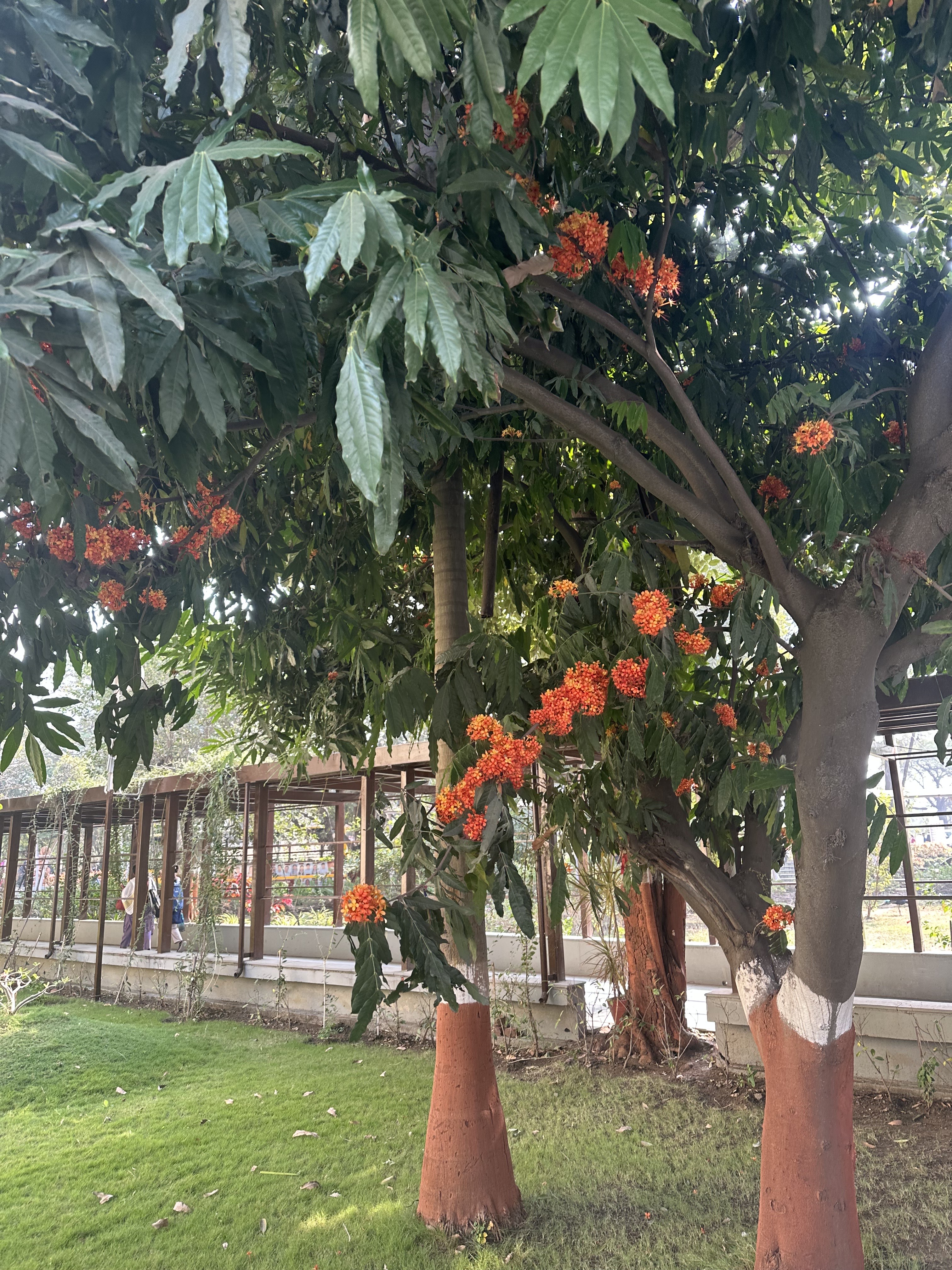
All photos by Anuradha Nanubala.