
The season is changing, the year is changing, the world is changing, and so are we. For the longest time, I had a large inertia about my principles and the world around me. But today, I believe that change is the only permanent thing in this universe. This change was not a sudden realization; instead, the idea sprouted when I planted the first tree of my life. It was a small sapling with raindrop-shaped leaves. It grew in no time to the height of a 15-year-old child (which was me at that time), and rapidly threw out branches of equal length in four directions, perpendicular to each other. They offered ideal support for climbing this mini tree for baby grey langurs and me, so one day I grabbed an axe and chopped them with my father, so that it would grow taller. Although I was sad while chopping the tender wood that once was the arms of my tree, this worked, and this tree doubled in height in the next year, now almost reaching the level of our roof, and already sprouting another set of branches. In the following couple of years, as I connected with nature more and more, my tree also started to do something very mundane yet remarkable. For the first time, I saw it flowering! At first, there were only thin, mouse-tail-like strands of green color with buds emerging from some of the top branches. In the coming few weeks, these buds on the rat tails opened, revealing beautiful white and rosy flowers. My tree looked like it had been given a bit of makeup for a wedding, and now, in retrospect, I know that it was their own wedding. By this time, I was already a novice naturalist, able to identify a small set of common birds and plants in the region, including a sunbird, some migrant butterflies, and a commotion of babblers that frequently visited my tree. It was only now that I was able to identify this neighbour of mine as an Indian almond (Terminalia catappa) and make it a friend by climbing the first story of their branches.
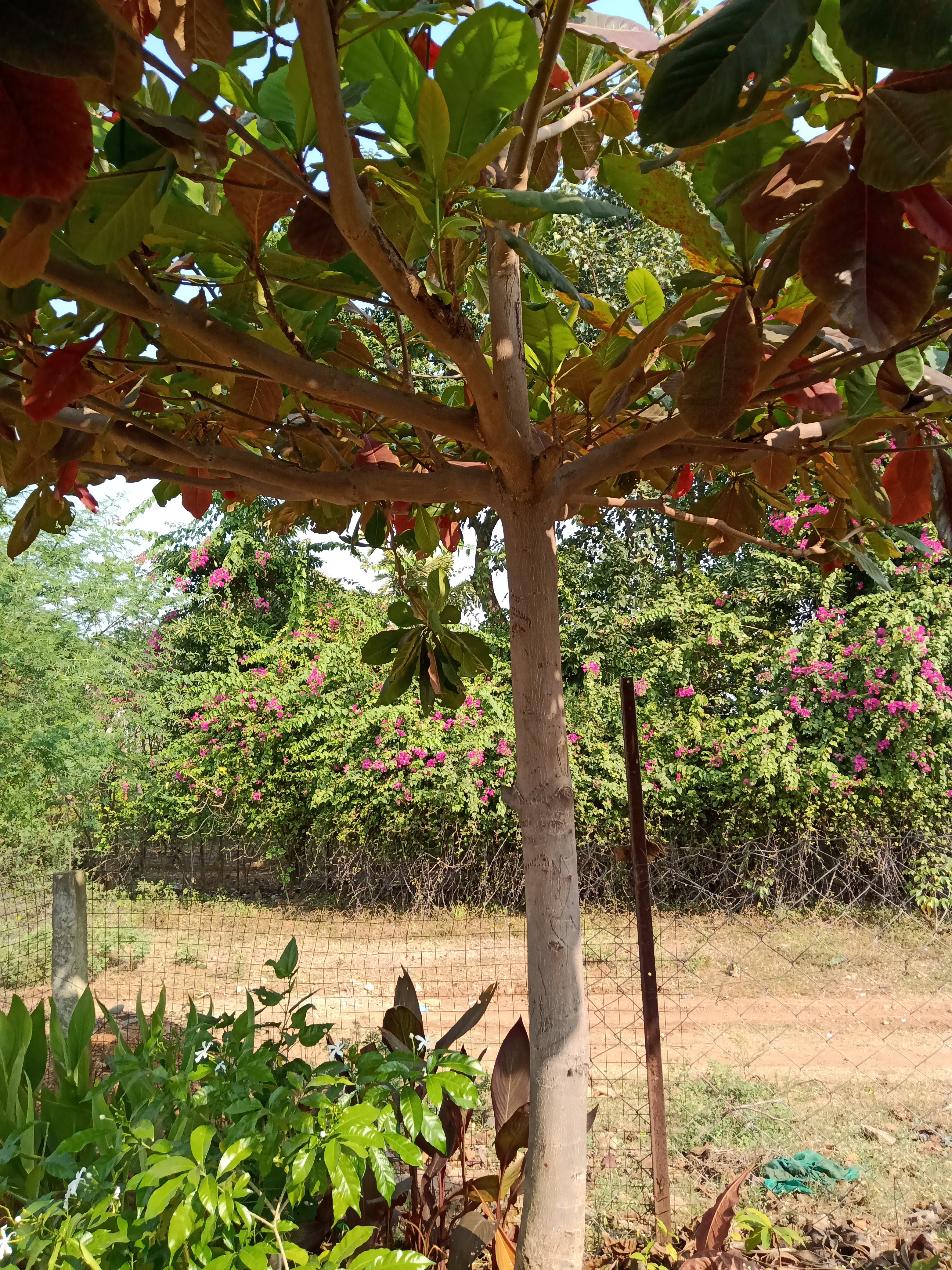
Leaves on the tree
Now I saw my friend’s blooms turn into fruits and attract small kids to collect the fallen nuts, split them open with a lot of labor, and cherish a tiny, slim almond as the prize. The tree stood as calmly and unaware as ever, but there was always a feeling of welcome in the hearts of all creatures that visited them. I saw my friend grow thicker and leafier, but mainly at the end of branches in clusters. I could now sit on their branches, and they could withstand the jumps of Langoors and stones of the kids without flinching. In turn, they have seen me navigate the messy teenage years, changing friend groups, and the yoga phase that followed. We both were growing together, but at seemingly different speeds and cycles. Over the years, I took up birding seriously and left for college, whereas my tree focused on producing more and more nuts and attracting new friends, such as bats and civets.
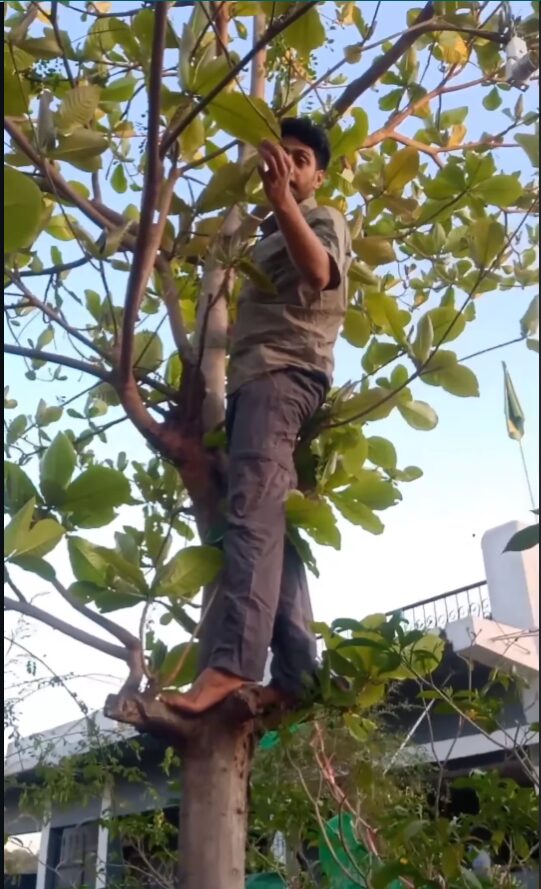 Me on the tree
However, one day in November, when I was burnt out with the online classes of COVID, I noticed and admired something that I had not acknowledged before – the change of seasons! My Almond tree friend was looking like a Renaissance painting under the yellow winter dust, with leaves in shades of red shining under the setting sun.
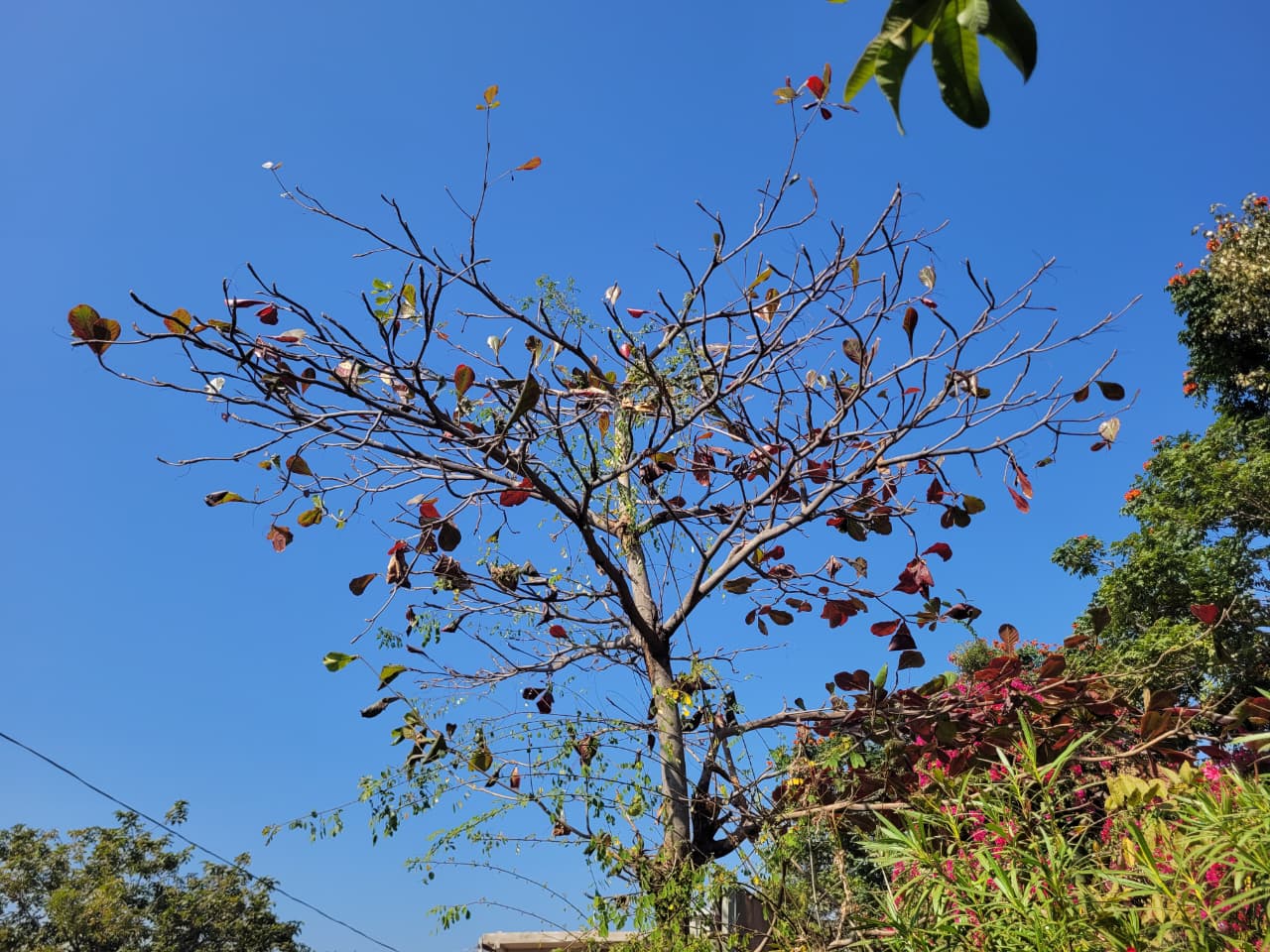
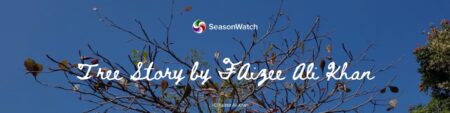
No leaves on the tree
It was a moment that I relive now every time the seasons change from monsoon to fall, and this event was the one that started my internal journey to realize the opening statement of this blog. Since that day, whenever I am overwhelmed, I recall being under my almond tree, feeling its leaf litter with my bare feet, and looking at the busy ants on its bark with no thoughts in my head. Even though the tree and I have matured, we are still changing. It never fails to surprise me with cobras in the leaf litter and bird lifers on the branches, as it constantly changes through the seasons yet remains constant.

Bark Mantis on the tree
P.S. This tree features in the first and last episodes of a funny educational content series that I run on Instagram.
About the Author : Faizee Ali Khan is an evolutionary ecologist, working with the Nature Conservation Foundation in Bangalore. He loves being outdoors and documenting nature as much as he loves to see the trends in ecological data. Though he never thought of science communication as his cup of tea, he thinks it sure is tasty!
Nice Read Author! Definitely a great way to start another series 🙂
What a story of growing and learning with a tree. Thank you for sharing. “…thin, mouse-tail-like strands of green” will always crack me up! 😀
I love this kind of writing. Tqvm. Definitely will read more from you. Well done!