The day went by collecting fruits, cutting fruit and munching on watermelon. As evening approached, my neighbour, Dr Punith and I started our evening shuttle badminton play ritual. Before the play, every day, we walked past some trees, 5 different ones, including guava, sapota, custard apple, lemon and pomegranate fruit trees.
In the season of sapota fruit, we had a great number of sapota fruits. As we collected the fruits, we observed the sapota tree. The tree itself was about 5.5 to 6 feet tall, and its branches spread between a guava tree, a pomegranate tree, and the pumpkin vines wrapped around it like a draped village girl. The leaves were green, ovate and glossy with a furry central vein. Leaves were also arranged alternately. Twice a year, the tree bore fruit. The flowers were white, bell-like, like stars between the green mesh of vines and sapota leaves. The sense of adventure instilled within each of us because of the coming of the seasons each year was exciting.
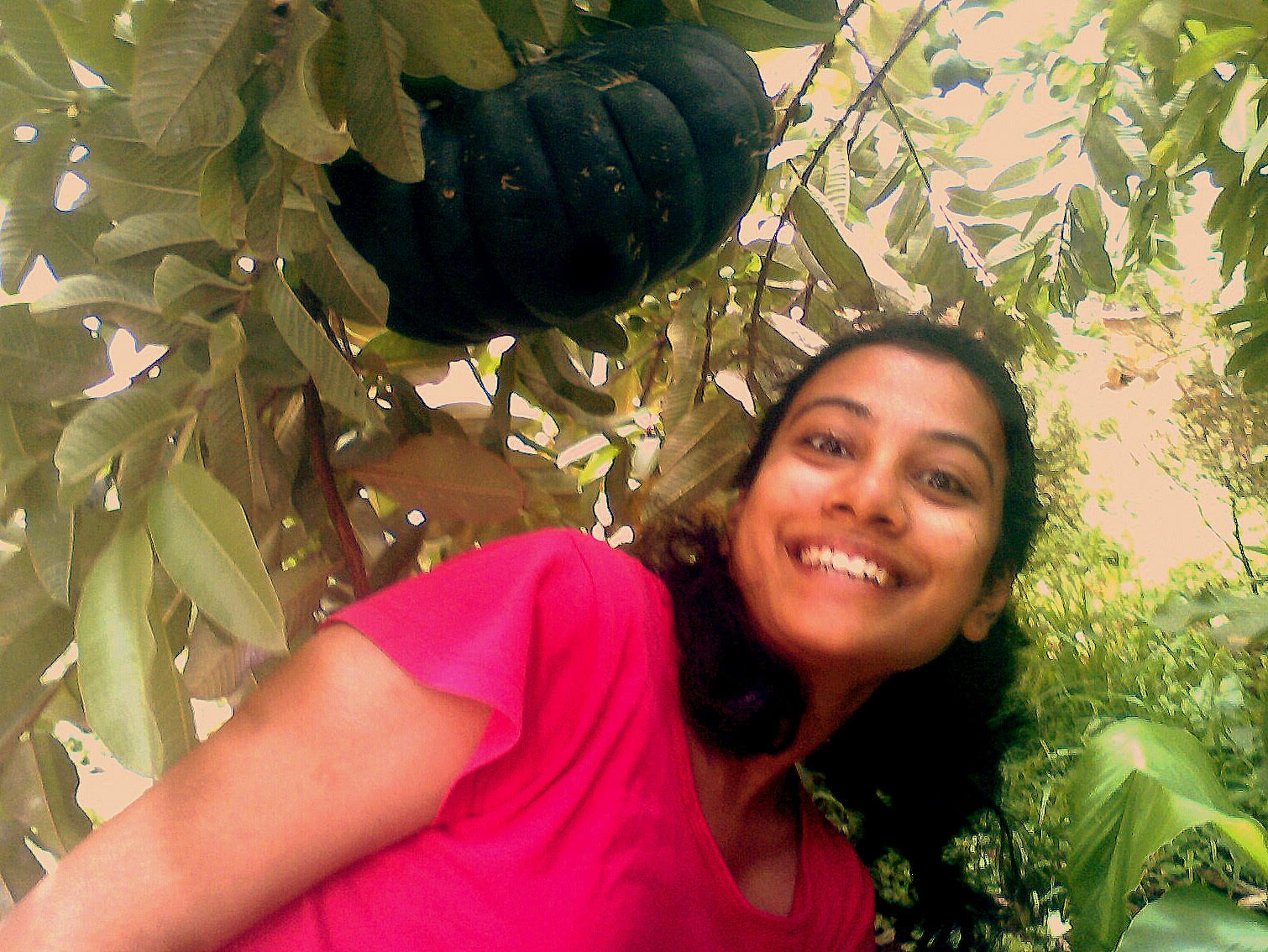
Sometimes, when walking past, the tree bore flowers, and we could see some insect activities around those bell-like flowers. We could see many bees and the other critters loitering around the sapota tree’s natural, whitish, bell-like flowers. Butterflies and their names that we didn’t know long ago, we knew because of a quick Google search, flew past like Blue tiger or blue Mormon or Common crow or the Common Guava Blue that is specific to Chiku trees, as the tree is the larval host plant. We felt a little like taxonomists observing these critter activities around the fruit trees. It had beetles, spiders, leafhoppers, and grasshoppers were some of the pointers as we sifted through the branches. A bunch of aphids, like insects, also cluttered around the petioles of the sapota tree. We also saw two garden lizards playing hide and seek between the aloe plants near the fruit trees. Though the garden lizards caught flies that came to visit the trees, we smiled at the sapota flowers.
In the season, we had Bonnet monkeys flock to the trees bearing fruits like brown stars and feast exuberantly on them. The monkey herd, including males, females, younger ones, middle-aged ones and older ones, were found near the trees. Dr Punith and I had a look under the leaves for fruits, not just sapota, but behind Guava or Pomegranate, and also for the cocoon, or aphids, or ants bunched up together at the tree’s corners, after our lunch, and walking through the way to our shuttle badminton game patch of the bungalow.
But as years passed by, the tree was sacrificed, and a new path was built. The pomegranate tree too disappeared. Only the aloe plants and lemon tree thrived, along with a new addition of the Jambu fruit tree. The custard apple trees survived, too.
About the Author: Anagha S Jahagirdar is a post-graduate from Mysuru. She likes reading stories to children at Gilivindu Children’s Library, Mysuru. She likes to write Kannada poems on nature, emotions or even curtains, ordinary things and put tunes to them. She has authored a poetry book in English.